
Rosemary Highland, Spain organic Essential Oil
Rosemary Highland, Spain organic Essential Oil
Out of stock
Sell by Date: March 2029
Couldn't load pickup availability
Product No. 2600
Rosmarinus officinalis
| Origin | Spain |
| Plant part | Twigs/Leaves |
| Cultivation | Wild-crafted organic |
| Certification | DE-ÖKO-007 |
| Extraction | Distilled |
| Main constituents | 1,8-Cineol, alpha- & beta-Pinene, Camphene, Borneol, Borneone |
| Aroma | Camphoraceous, Herbaceous, Spicy |
| Ingredients (INCI) | Rosmarinus officinalis Leaf Oil* |
*Certified organic, DE-ÖKO-007.
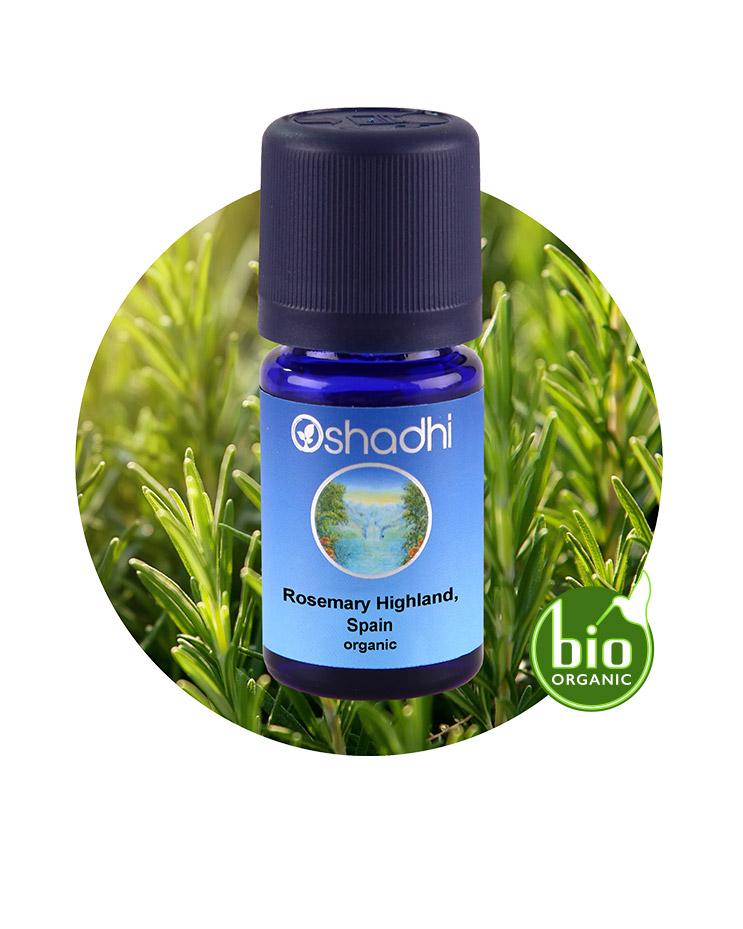
Rosemary is not one oil. The same species yields cineole, camphor and verbenone chemotypes, and the balance depends on where the plant grows. Rosmarinus officinalis has also been reclassified as Salvia rosmarinus, and both names remain in use on labels.
01 · Origin
A woody evergreen shrub of the Lamiaceae, native to the Mediterranean. This oil comes from wild-crafted organic plants of the dry Spanish highlands. Sun and thin mineral soils shape a strong, resinous oil.
02 · Chemistry
1,8-cineole leads. Alpha- and beta-pinene, camphene, borneol and camphor (borneone) follow. The combination of cineole with a significant camphor fraction gives Spanish rosemary its depth. Comparison with Rosemary Highland, France (No. 2605) and Rosemary, Verbenone (No. 2620) shows the chemotypic range of the species.
03 · In Practice
Camphoraceous, herbal and spicy, with a clean resinous lift. A top to middle note. Diffusion, massage blends, foot and leg preparations, and scalp and hair formulations. Blends with lavender, peppermint, eucalyptus, cedarwood, lemon, pine and frankincense.
General information: For external use only. Dilute before applying to skin. Keep away from heat and sunlight. Keep out of reach of children. Avoid contact with eyes and mucous membranes.
How to use Essential Oils
Find out more about how Essential Oils can be used and the different application methods:
https://oshadhi.com/pages/how-to-use-essential-oils