Materia Aromatica
Spiritual & Resinous
Frankincense, labdanum, benzoin and the balsams. Resins read by fraction.
See the oils ↓Materia Aromatica · Scent
Resinous oils are often thought of as one smell, the smell of incense. The family covers two different chemistries. Frankincense, elemi and copaiba are distilled from oleoresins and are largely terpenes, fresh at the top and woody beneath. Benzoin and the Peru and tolu balsams are built on benzoic and cinnamic esters, and read sweet, warm and close to vanilla.
01 · The Family
Terpene resins and aromatic balsams
Oleoresins are exuded by trees when the bark is cut, chiefly in the Burseraceae, Fabaceae and Dipterocarpaceae. Distillation takes the volatile fraction: alpha-pinene, limonene, sabinene and alpha-thujene in frankincense; limonene, elemol and elemicin in elemi; beta-caryophyllene in copaiba; the gurjunenes in gurjum balm. These oils move from a fresh, almost citrus top to a dry, woody drydown.
The balsams belong to a second chemistry. Benzoin, Peru balsam and tolu balsam are rich in benzyl benzoate, benzyl cinnamate and the free benzoic and cinnamic acids. They are barely volatile, are often supplied as absolutes or diluted in alcohol, and act as base notes and fixatives. Cistus, the source of labdanum, sits between the two, with a terpene top and a dense, ambery base. Tonka and vanilla join the family through coumarin and vanillin. Spikenard belongs to it by its long use in incense and ritual.
Terpene oleoresin
Frankincense
Pinenes, limonene and sabinene, or alpha-thujene, depending on species.
Aromatic balsam
Benzoin, Peru and tolu
Benzyl benzoate, benzyl cinnamate and the free acids. Sweet and fixative.
Ambery
Cistus
Pinenes and bornyl acetate over a dense, ambery fraction.
Coumarin and vanillin
Tonka and vanilla
The sweet base materials of the family.
-
Regular price $14.25Regular priceUnit price per
$19.00Sale price $14.25Sale -
Regular price $30.75Regular priceUnit price per
$41.00Sale price $30.75Sale -
Regular price $15.75Regular priceUnit price per
$21.00Sale price $15.75Sale -
Regular price $14.25Regular priceUnit price per
$19.00Sale price $14.25Sale -
Regular price $18.75Regular priceUnit price per
$25.00Sale price $18.75Sale -
Regular price From $22.50Regular priceUnit price per
$30.00Sale price From $22.50Sale -
Regular price $24.00Regular priceUnit price per
$32.00Sale price $24.00Sale -
Regular price $13.50Regular priceUnit price per
$18.00Sale price $13.50Sale -
Regular price From $10.50Regular priceUnit price per
$14.00Sale price From $10.50Sale -
Regular price $11.25Regular priceUnit price per
$15.00Sale price $11.25Sale -
Regular price $30.75Regular priceUnit price per
$41.00Sale price $30.75Sale -
Regular price $36.00Regular priceUnit price per
$73.00Sale price $36.00Sale -
Regular price $26.25Regular priceUnit price per
$35.00Sale price $26.25Sold out -

 Sold outRegular price $51.00Regular priceUnit price per
$68.00Sale price $51.00Sold out -
 Sold outRegular price From $15.00Regular priceUnit price per
$20.00Sale price From $15.00Sold out -
Regular price $24.00Regular priceUnit price per
$32.00Sale price $24.00Sold out -
 Sold outRegular price From $12.75Regular priceUnit price per
$17.00Sale price From $12.75Sold out -
 Sold outRegular price $15.75Regular priceUnit price per
$21.00Sale price $15.75Sold out -
 Sold outRegular price $11.25Regular priceUnit price per
$15.00Sale price $11.25Sold out




02 · The Range
Ten oils, resin to balsam
03 · Side by Side
Three comparisons
Three frankincenses first. Frankincense, Carterii (No. 3010) and Frankincense, Sacra (No. 3021) are both led by alpha-pinene and limonene and read bright, lemony and resinous. Frankincense, Serrata (No. 3012), from India, is led by alpha-thujene and reads sharper and more peppery. The difference between species is greater than the difference between origins.
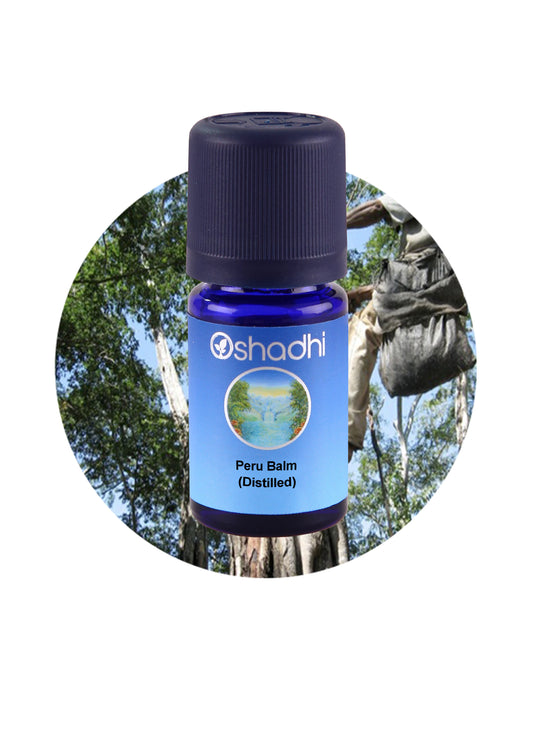
Then two grades of one balsam. Peru Balm, distilled (No. 2410) and Peru Balm, natural (No. 2415) share benzyl benzoate and benzyl cinnamate. The natural balsam keeps more of the heavy fraction and some nerolidol, and is thicker and darker. The distilled grade is fluid and easier to formulate with.
Then the Burseraceae beyond Boswellia. Palo Santo (No. 2375) is a wood oil led by limonene and alpha-terpineol, with a minty facet from carvone. Frankincense, Brazil / Breu Branco (No. 1204) is a Protium resin, led by para-cymene and terpinolene. Elemi (No. 1340) is a Canarium resin with elemicin. Each is a member of the Burseraceae with a profile of its own.
04 · In Practice
Incense, amber and fixation
In natural perfumery the resins and balsams work as base notes and fixatives. Labdanum, benzoin and vanilla make up the amber accord. Frankincense gives an incense note from the top to the heart and pairs with bergamot, rose and sandalwood. Copaiba is a soft blender that extends a formula without changing it much. Tonka and the balsams round and sweeten oriental accords.
For diffusion, frankincense, elemi and palo santo diffuse well. The balsams and absolutes are too viscous for most diffusers and are better studied on a strip. Frankincense and spikenard are often used in meditation practice and in blends for incense. In massage blends and skincare formulation, frankincense and copaiba are the most frequently used. Crude Peru balsam is restricted as a fragrance ingredient in leave-on products; the distilled grade is the form used in formulation. Benzoin and the cinnamic balsams are dermal sensitisers and are used at low dilution.
Essential oils are for aromatic and topical use. Dilute before applying to skin. Keep out of reach of children.