
Helichrysum Gymnocephalum / Immortella (wild)
Helichrysum Gymnocephalum / Immortella (wild)
11 in stock
Couldn't load pickup availability
Product No. 1593
Helichrysum gymnocephalum
| Origin | Madagascar |
| Plant part | Blossoms/Leaves |
| Cultivation | Wild |
| Extraction | Distilled |
| Main constituents | 1,8-Cineol, Paracymene, alpha- & beta-Pinene, Terpinene-4-ol |
| Aroma | Camphoraceous, Medicinal |
| Ingredients (INCI) | Helichrysum Gymnocephalum Flower Oil |
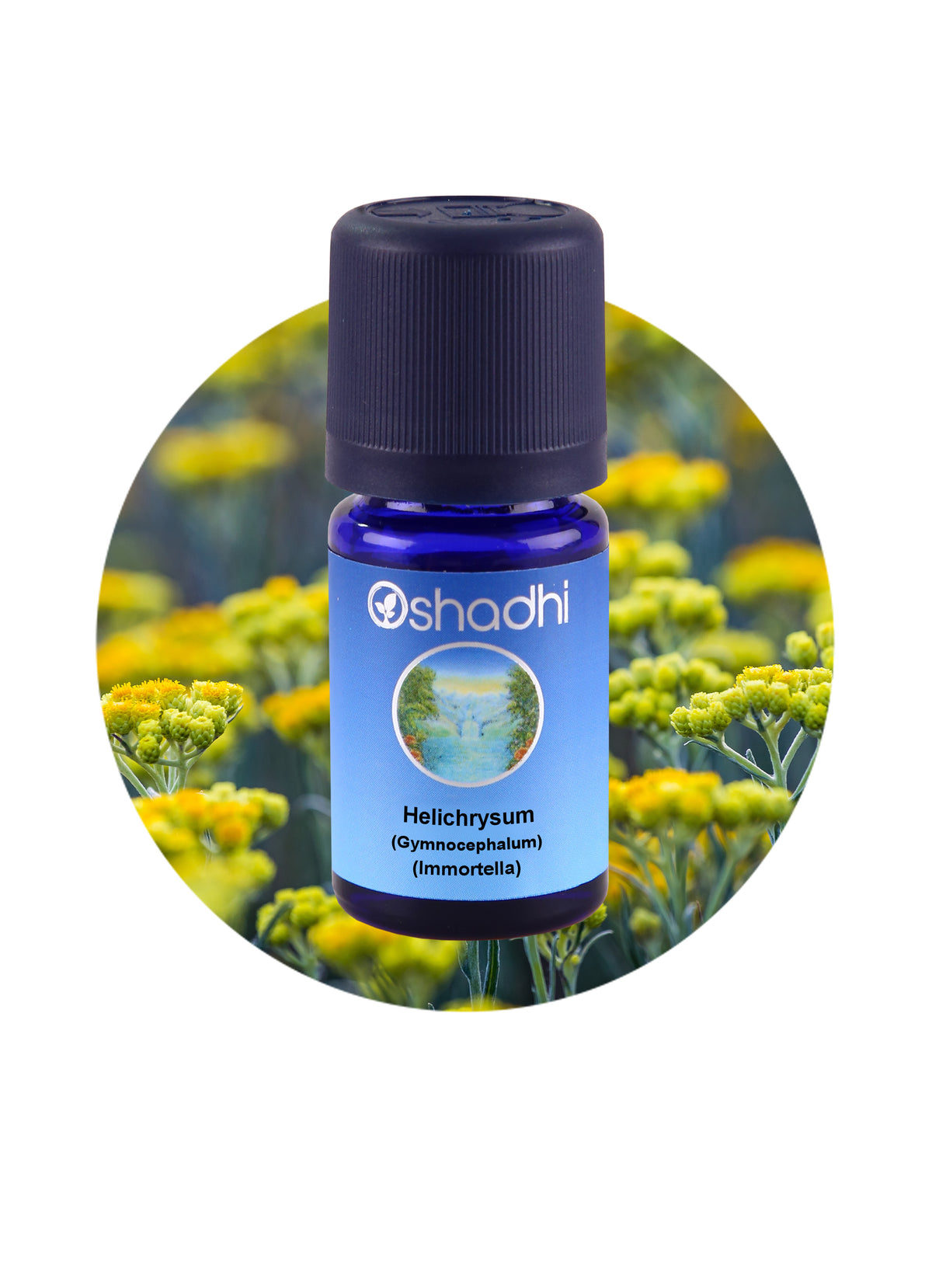
Not every helichrysum carries the profile of Helichrysum italicum. Helichrysum gymnocephalum is a Madagascan species in which neryl acetate is not a main constituent. Its oil is cineole-led, and in a blend it behaves more like a camphoraceous leaf oil than an everlasting.
01 · Origin
A shrub of the daisy family, Asteraceae, found in the uplands of Madagascar. This oil is distilled from the blossoms and leaves of wild plants in Madagascar.
02 · Chemistry
1,8-cineole leads. Para-cymene and alpha- and beta-pinene follow, with terpinen-4-ol. The result is more camphoraceous, sharper and more lifted than italicum. Comparative work alongside Helichrysum Italicum, Superior (No. 1597) makes the divergence within the genus plain.
03 · In Practice
Fresh, camphoraceous and herbaceous, with a soft, slightly honeyed note beneath. Top to middle in evaporation. Diffusion, massage blends, bath preparations and olfactory study within the genus. Blends with ravintsara, eucalyptus, lavender, rosemary, cypress, frankincense and pine.
General information: For external use only. Dilute before applying to skin. Keep away from heat and sunlight. Keep out of reach of children. Avoid contact with eyes and mucous membranes.
How to use Essential Oils
Find out more about how Essential Oils can be used and the different application methods:
How to use essential oils